
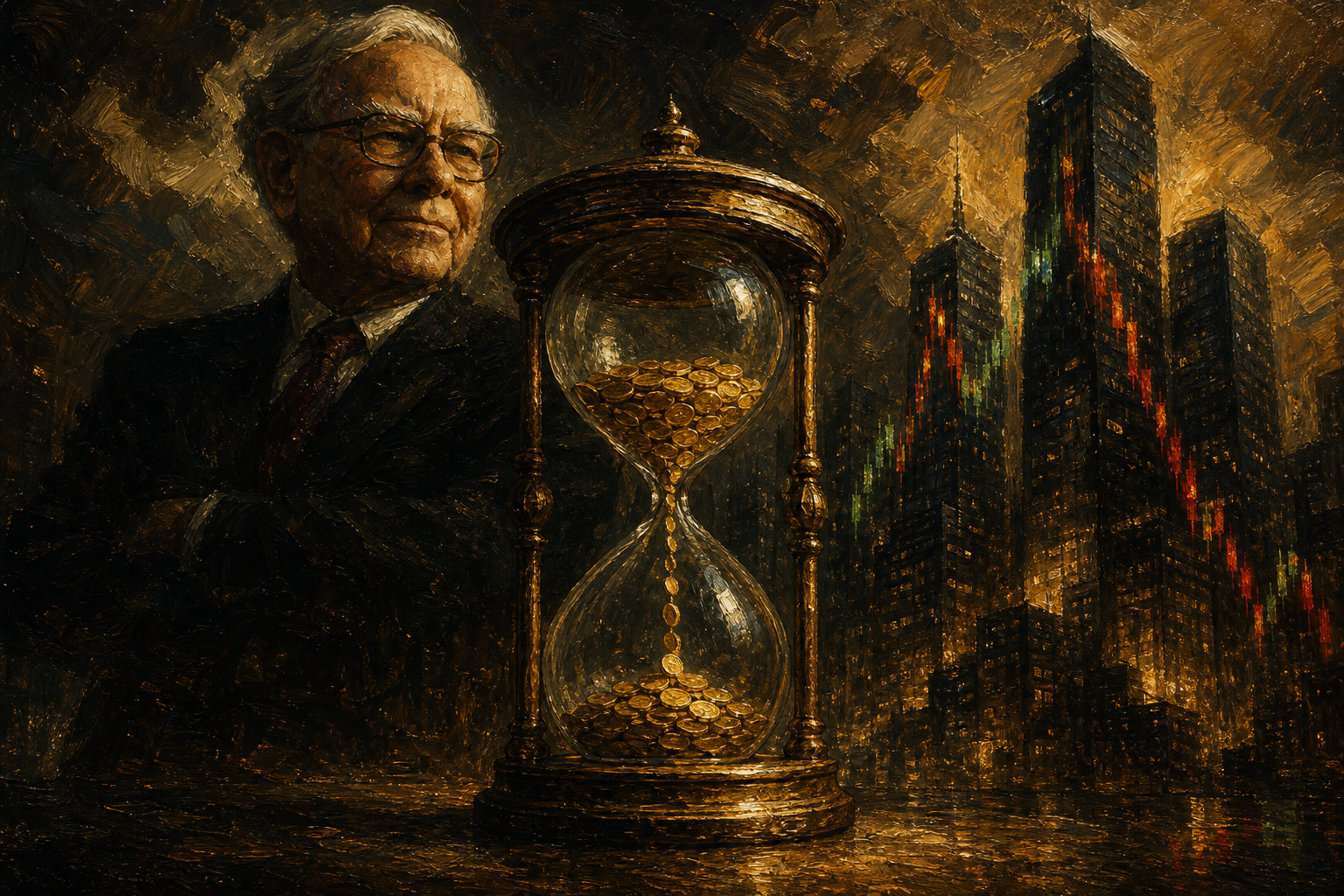
In the grand theater of American finance, few endorsements carry the weight of Warren Buffett's—especially when it pertains to the Federal Reserve. Recently, Buffett described Trump's nomination of Kevin Warsh for Fed Chair as a 'good choice,' igniting discussions that ripple through the corridors of Wall Street. This endorsement isn't merely a nod; it serves as a potential harbinger of shifts within the Fed's approach, with implications that could resonate throughout the markets.
As seasoned investors know, the Fed's leadership can steer the ship in turbulent waters. Buffett's backing of Warsh hints at a future where monetary policy may favor more traditional economic principles, possibly seeking to rein in inflation while fostering growth. The real question, however, is how this leadership change could impact investor sentiment and market dynamics—especially in relation to Treasury yields and rate-sensitive exchange-traded funds (ETFs) like $XLF and $TLT).
The Market’s Reaction to Warsh's Testimony
The recent testimony from Warsh has been a focal point for market watchers. His approach and insights during these sessions can provide critical clues about the Fed's trajectory under his leadership. If Warsh maintains a hawkish stance on inflation, we could see an uptick in Treasury yields as the market adjusts to anticipated rate hikes. Conversely, if he leans more dovish, it could lead to a rally in rate-sensitive assets, offering a lifeline to ETFs such as $XLF, which focuses on financials, and $TLT, which tracks long-term Treasury bonds.
Investors are already bracing for the potential fallout from Warsh's eventual confirmation. The market's credibility hinges on the Fed's ability to navigate the delicate balance between curbing inflation and supporting economic growth. With Buffett’s seal of approval, there’s a renewed confidence that Warsh could steer the Fed with a steady hand, yet the road ahead remains fraught with uncertainty.
Treasury Yields: The Balancing Act
The implications of Warsh's leadership could extend beyond mere rhetoric. A shift in Fed policy under his direction might lead to increased volatility in Treasury yields, which in turn influences everything from mortgage rates to corporate borrowing costs. Should the Fed signal a more aggressive approach to interest rates, this could push yields higher, impacting the pricing of rate-sensitive ETFs.
However, a more tempered approach might keep yields in check, allowing for a more favorable environment for both growth and income-oriented investors. The interplay between Warsh's policy direction and market expectations is pivotal, and as we’ve seen in past cycles, the Fed’s moves can reverberate across various sectors of the economy.
Investor Sentiment and Outlook
Buffett’s endorsement also underscores a potential shift in investor sentiment. When a figure of his stature expresses confidence in a candidate, it can embolden investors to adopt a more optimistic outlook. Yet, this optimism must be tempered with caution; the complexities of the current economic landscape mean that any changes to Fed policy will require careful navigation.
As the market digests these developments, the focus will remain on how Warsh's policies unfold in practice. Will he be the steady captain that Buffett anticipates, or will the seas of economic uncertainty prove too tumultuous? For investors, the key will be to stay informed and adaptable, ready to pivot as new information emerges from the Fed’s chambers.
In conclusion, Warren Buffett’s endorsement of Kevin Warsh as Fed Chair not only reflects confidence in his capabilities but also signals potential shifts in monetary policy that could impact Treasury yields and rate-sensitive investments. As the market anticipates Warsh’s confirmation and subsequent actions, investors will need to stay alert to these unfolding dynamics.
Read more on CNBC